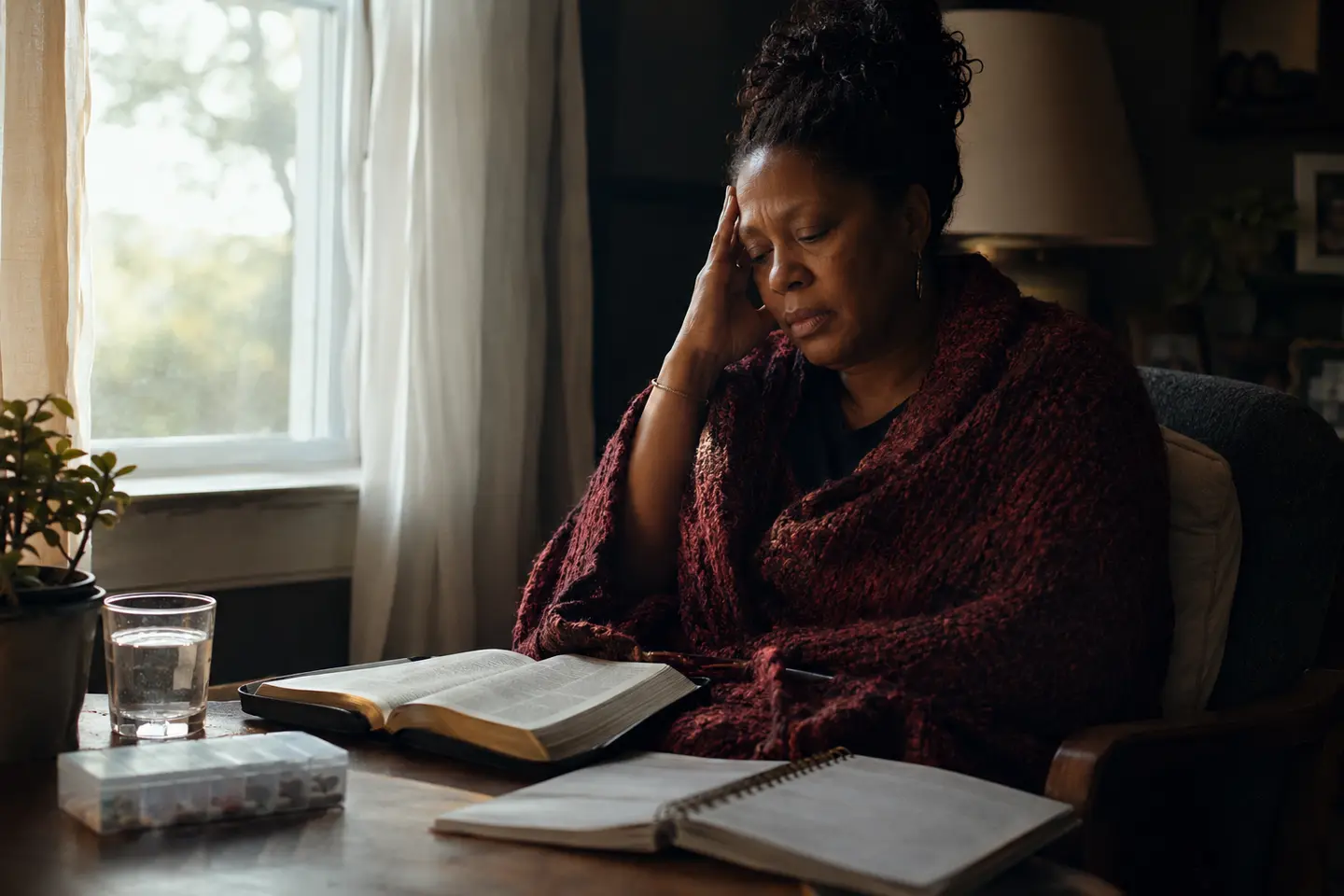
Do not turn pain into a courtroom too quickly
When suffering lasts, the mind searches for a reason. Did I fail? Is God punishing me? Did I miss a sign? Sometimes there are practical causes and consequences that need honest attention. Scripture still refuses the simple formula that every sufferer earned the suffering in front of them.
Job’s friends defend a tidy system. The book exposes how their certainty adds accusation to grief.
KJV SCRIPTURE THREADJob 1–2; 38–42Integrity, loss, protest, limited human knowledge, divine encounter, and the failure of easy explanations
↗Presence does not always arrive as relief
Psalm 34 says the Lord is near to the brokenhearted. Nearness is not the same as an immediate cure. Sometimes presence is the strength to face one more appointment, the friend who brings food, the doctor who keeps investigating, the quiet that prevents despair from having the last word, or the grace to ask for help.
We should not force every story into a miracle timeline. Hope can be real without making promises God has not made to us about the outcome or date.
Do not measure God’s nearness only by how quickly the pain leaves.KJV SCRIPTURE THREADPsalm 34
Seeking, fear, deliverance, brokenheartedness, affliction, and the Lord’s attentive presence
↗Paul prayed and still had to live with the answer
Paul describes a thorn, repeated prayer, and an answer centered on sufficient grace and power in weakness. The passage has been interpreted in different ways, and it should not be used to tell sick people to stop seeking care. Its plain force is that unanswered relief did not erase Paul’s belonging or usefulness.
Weakness can change the pace, the method, and the support required. It does not erase dignity.
KJV SCRIPTURE THREAD2 Corinthians 12:1–10Repeated petition, an unresolved thorn, sufficient grace, and power in weakness
↗Build a care circle around the prayer
Keep records. Ask questions at appointments. Bring another person when the information is heavy. Take medication as directed and discuss concerns with qualified clinicians. Make room for rest, accessibility, grief, practical help, and spiritual care.
If you are in immediate danger, feel unable to stay safe, or face a medical emergency, contact local emergency services or a qualified crisis resource. Prayer belongs beside responsible care, never in place of urgent help.
- Write the current symptoms, questions, and changes before appointments.
- Ask one person to help with transportation, meals, children, or notes.
- Use lament without apologizing for its honesty.
- Refuse spiritual explanations that shame you away from necessary care.
ROOM TO SIT WITH IT
Questions for prayer, journaling, or honest conversation.
- 01
Which explanation for my suffering has produced shame rather than wisdom?
- 02
What form of care or practical support is missing from my circle?
- 03
How can I recognize presence even while I continue asking for relief?