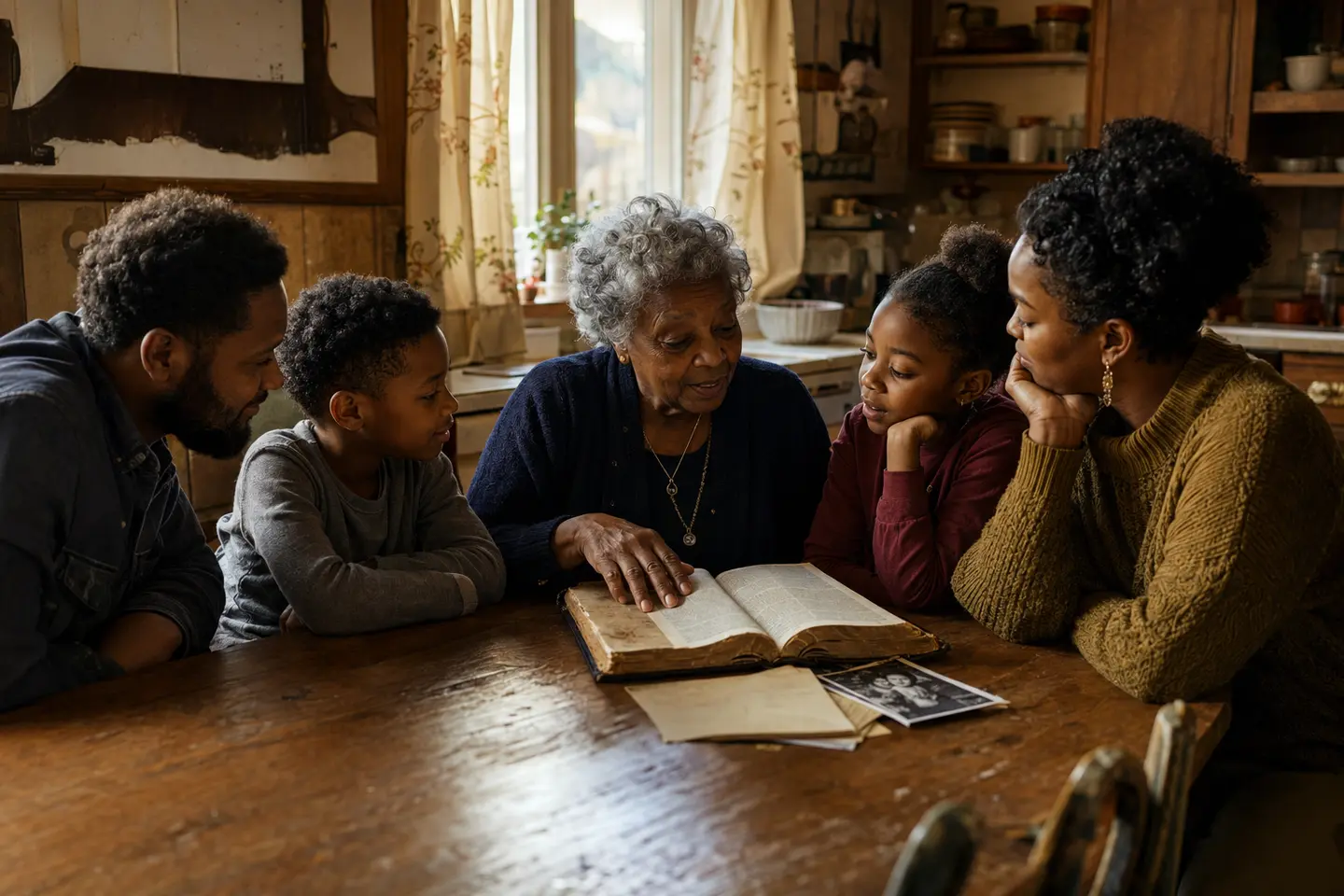
The house teaches before the lesson begins
Read Deuteronomy 6:20-25 with the household in view. Children and adults learn from repeated tone, apology, spending, correction, welcome, secrecy, work, rest, and the way power behaves when nobody outside can see.
The covenant teaching pattern expects the next generation to ask what the testimonies and statutes mean. Family faith becomes credible when the spoken lesson and the practiced life are willing to meet.
KJV SCRIPTURE THREADDeuteronomy 6:20-25Read the complete passage before reducing it to a conclusion about family worship should make room for questions.
↗Honor needs truth and safety
Biblical honor is not a command to protect appearances at the cost of truth. Love can include boundaries, outside help, patient listening, confession, consequences, and the refusal to make a child or vulnerable adult carry the family's public image.
This is the iron inside the velvet glove. The truth should be strong enough to confront us, but it should not be carried with contempt, ego, or delight in another person's shame.
Legacy is not only what we leave. It is what the people in our house repeatedly experience from us.
Repair before the pattern becomes inheritance
Every household has unfinished history. Name the pattern without turning ancestry into an excuse or a weapon. Receive what was faithful. Grieve what was harmful. Apologize specifically. Make restitution where possible. Build the support a changed pattern actually needs.
Grace gives a family room to tell the truth without declaring anyone beyond redemption. Accountability keeps that grace from becoming another quiet agreement to repeat the damage.
- Read Deuteronomy 6:20-25 and name what it states before building an inference.
- Put the central concern in your own words: The covenant teaching pattern expects the next generation to ask what the testimonies and statutes mean.
- Test this proposed practice for truth, wisdom, and neighbor impact: End the reading with 'What did you notice, question, dislike, or hope?'
- Notice who carries the cost, then choose an action that can be honest, observable, and accountable.
Put one practice at the table
End the reading with 'What did you notice, question, dislike, or hope?' This is not a performance of arrival. It is one accountable act of obedience that can be named, attempted, reviewed, and repaired.
Keep the practice small enough to repeat and honest enough to matter. Return next week and ask what helped, what failed, and what needs repair. A house remembers what it rehearses, so let truth, prayer, fairness, welcome, and apology become familiar sounds.
KJV SCRIPTURE THREADDeuteronomy 6:4-9Faith remembered and taught through the ordinary rhythms of home
↗ROOM TO SIT WITH IT
Questions for prayer, journaling, or honest conversation.
- 01
What assumption does "Family Worship Should Make Room for Questions" ask me to test against the whole passage?
- 02
Where does this truth confront my desire, use of power, speech, habit, or responsibility?
- 03
What would it cost or change to take this practice seriously before the week ends: End the reading with 'What did you notice, question, dislike, or hope?'
WRITER’S NOTEWritten from lived faith and careful study, not from a claim of pastoral office or private revelation.