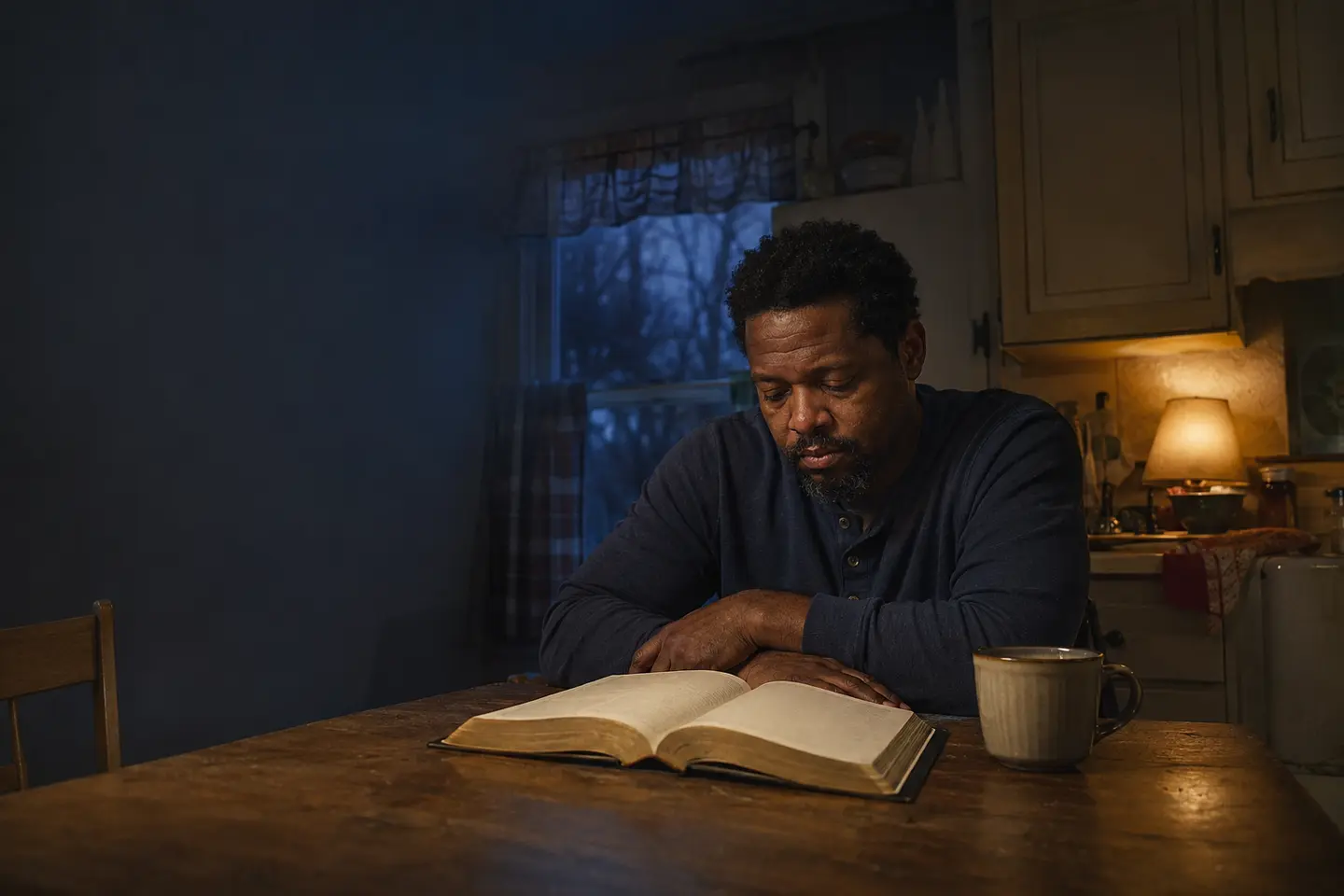
Morning: receive before the day begins making demands
Choose a short passage and read the whole paragraph, not merely an isolated promise. Notice one truth about God, one word that addresses your condition, and one response the text invites. Then name the actual day: appointments, fears, duties, temptations, people, and decisions. Prayer does not require a fictional morning.
Ask for daily bread rather than the whole map. Write one sentence: “Today, faithfulness looks like…” Keep it concrete enough to recognize. If the morning is disrupted, listen to the passage later or carry one line with you. Missing an hour does not cancel the invitation to return.
KJV SCRIPTURE THREADPsalm 5:1–3Morning prayer brings words, meditation, expectation, and ordered attention before God.
↗Midday: notice what has taken the wheel
Pause for two minutes before the next task, in a parked car, at a desk, by a sink, or outside. Breathe without trying to manufacture a mood. Ask: What am I carrying in my body? What story am I repeating? Who has become an obstacle in my mind? What responsibility is actually mine next?
Return to the morning sentence and revise it if new information requires wisdom. A midday prayer may be confession, gratitude, lament, or a request for restraint before sending a message. The goal is not uninterrupted calm. It is renewed attention before reaction becomes direction.
A return is not starting the whole life over; it is placing the next step back under truth.
Evening: review without conducting a trial against yourself
Name one mercy received, one moment of faithfulness, one place you caused or carried harm, and one matter that remains unfinished. Thank God, confess without excuse, and decide whether repair needs a message, an apology, repayment, counsel, or a changed plan tomorrow.
Release what cannot be solved tonight. If anxiety, pain, unsafe circumstances, or persistent despair exceeds what a devotional can hold, contact trusted and qualified support. Evening prayer can accompany responsible care; it should not become a demand to endure alone.
- Morning: read, name the day, and choose one faithful action.
- Midday: notice body, story, relationship, and next responsibility.
- Evening: receive mercy, confess truthfully, plan repair, and release the night.
- Interrupted day: return at the next available moment without punishment.
Keep the practice alive by keeping it honest
Use a minimum version for difficult days: one verse in context, one honest sentence, and one next action. Use a fuller version when the season permits. Families can adapt the rhythm to a meal or bedtime without forcing private disclosure from children or turning devotion into a behavior-control device.
Lamentations 3 remembers mercy in the middle of affliction, not outside it. Review the rhythm after two weeks by its fruit: Is Scripture becoming more present? Is prayer more honest? Are apologies and decisions clearer? Adjust the form while preserving the invitation to return.
KJV SCRIPTURE THREADLamentations 3:21–26Hope remembers mercy and faithfulness while the larger lament remains truthful.
↗ROOM TO SIT WITH IT
Questions for prayer, journaling, or honest conversation.
- 01
Which time of day most needs a brief return to truth and attention?
- 02
What is the smallest version of this rhythm I can keep on a difficult day?
- 03
What fruit would tell me the practice is serving formation rather than scorekeeping?