Observe the curriculum already running
For seven days, notice what the household repeats. Record the tone used under stress, who is expected to serve, whether children can ask honest questions, how mistakes are handled, and what happens when somebody says no. Include schedules, screens, meals, worship, work, rest, spending, and hospitality. Observation should precede accusation.
Deuteronomy 6 places teaching inside walking, sitting, rising, and ordinary life. The passage does not reduce formation to a weekly lesson. It asks whether love for God becomes familiar in the daily environment. Compare the household’s stated values with the patterns people actually experience.
KJV SCRIPTURE THREADDeuteronomy 6:4–9Covenant love is taught through repeated words and the ordinary rhythms of home.
↗Tell family history without worshiping or weaponizing it
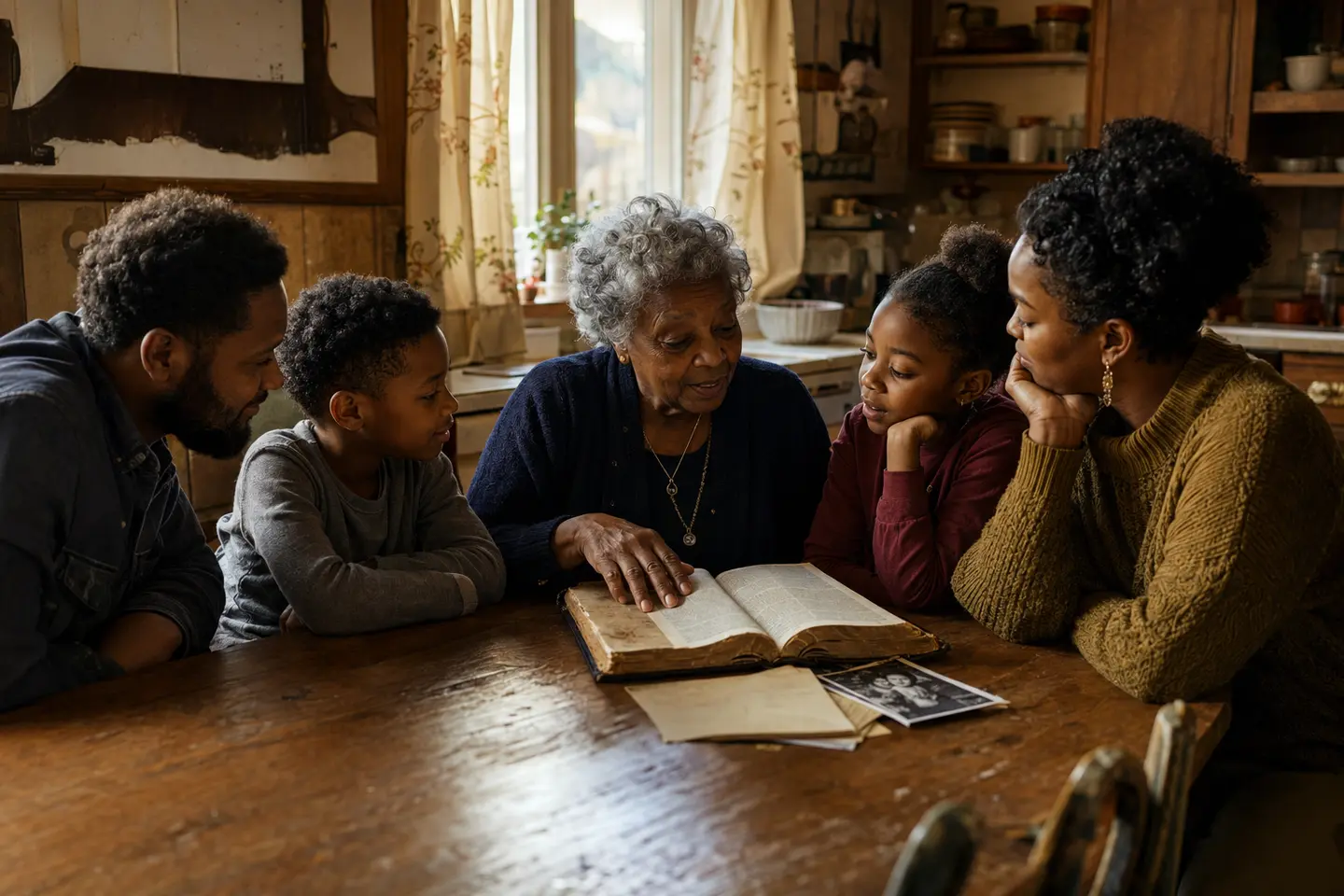
Gather names, photographs, recipes, songs, migration stories, work histories, prayers, losses, celebrations, and records while living witnesses can explain them. Label what is known, what is remembered differently, and what remains uncertain. A truthful archive honors ancestors more deeply than a polished legend.
Name both inheritance and injury. Poverty, racism, displacement, grief, addiction, secrecy, resilience, faith, skill, and mutual aid may all occupy the same history. Context can produce compassion without becoming an excuse for repeated harm. No child should be forced to protect the family image by denying their experience.
A house remembers what it rehearses, and it can learn a truer rehearsal without despising where it came from.
Choose repair that can be experienced
Select one pattern whose cost is visible: contempt during disagreement, unequal labor, financial secrecy, inconsistent discipline, avoidance of apology, or spiritual language used to end questions. Ask the people affected what repair would change in the room, not merely what statement would sound sincere.
Adults must carry adult responsibility. Do not make children mediate conflict, manage an adult’s emotions, or provide forgiveness on demand. Serious safety concerns may require qualified support and boundaries outside the home. Household unity is not preserved by assigning silence to the least powerful person.
- Name the pattern without turning one person into the entire family story.
- Apologize specifically and remove the excuse from the sentence.
- Change the schedule, access, budget, or support that kept the pattern in place.
- Review the repair with the people who were carrying its cost.
Install one small rhythm the house can keep
Choose a practice modest enough to repeat: one phone-free meal, a weekly family check-in, a shared Psalm, a transparent budget conversation, a rotating responsibility, or a monthly story night. Assign who prepares it, how long it lasts, and when the family will decide whether it serves its purpose.
Psalm 78 warns against hiding the works of God from the next generation while also remembering the failures of those who came before. Legacy is neither nostalgia nor branding. It is truthful memory becoming wiser practice so those who follow receive more than unfinished patterns.
KJV SCRIPTURE THREADPsalm 78:1–8The next generation receives both testimony and warning so it may set its hope in God.
↗ROOM TO SIT WITH IT
Questions for prayer, journaling, or honest conversation.
- 01
What does our household repeat under pressure that our stated values do not admit?
- 02
Which family story needs better documentation, more context, or an honest correction?
- 03
What one rhythm could we practice for four weeks and then review together?