Deliverance comes before the demand
Exodus 20:8-11 belongs to a covenant story that begins with God bringing a people out of bondage. The command is not a ladder by which Israel earns rescue. It is the moral shape of life with the God who has already acted.
Sabbath declares that people, servants, immigrants, animals, and the land are more than production units. Read that claim inside the whole scene and the command becomes more than a private rule. It forms worship, memory, desire, neighbor care, and public trust.
KJV SCRIPTURE THREADExodus 20:8-11Read the complete passage before reducing it to a conclusion about sabbath: the holy limit that power hates.
↗Ask what the command protects
Every command draws a boundary around something that must not be consumed by appetite or power. God's name, worship, rest, life, marriage, property, reputation, and inward desire all matter because covenant faithfulness reaches the whole person and the whole community.
This is the iron inside the velvet glove. The truth should be strong enough to confront us, but it should not be carried with contempt, ego, or delight in another person's shame.
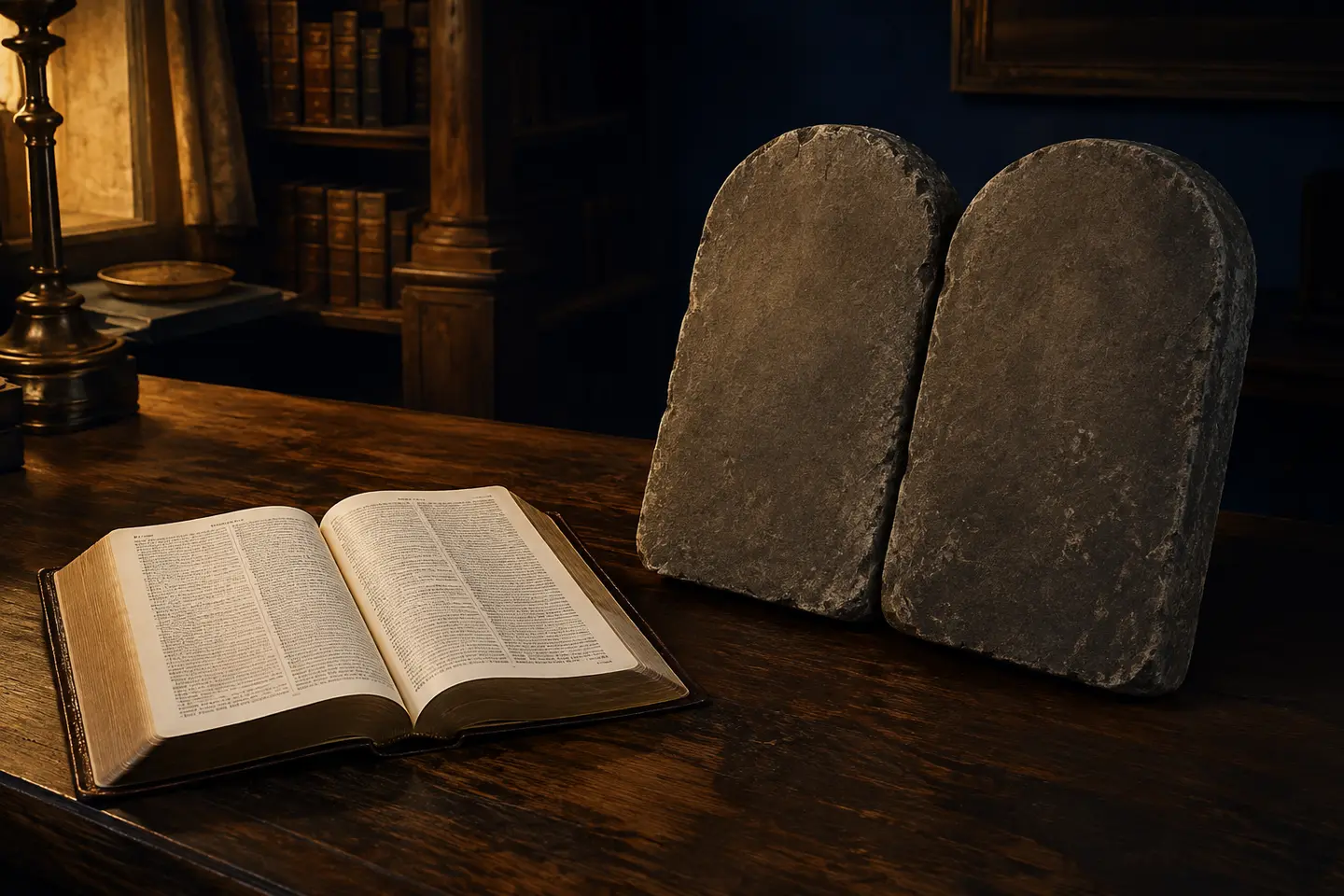
A commandment is not wall decor. It is a mirror, a boundary, and a way of learning to love God and neighbor without disguise.
Let Jesus carry it into the heart
Jesus does not make covenant faithfulness shallow. He exposes anger beneath murder, objectification beneath adultery, manipulation beneath religious speech, and divided loyalty beneath public devotion. Grace does not erase this moral seriousness. Grace meets us truthfully and makes repentance possible.
This study is not a shortcut for importing ancient Israel's civil penalties into a modern state, household, or church. The law belongs first to Israel's covenant story. Christians read it through its literary setting, the prophets, the teaching of Jesus, the apostolic witness, and the law's enduring revelation of God's holiness, justice, mercy, and concern for neighbors.
- Read Exodus 20:8-11 and name what it states before building an inference.
- Put the central concern in your own words: Sabbath declares that people, servants, immigrants, animals, and the land are more than production units.
- Test this proposed practice for truth, wisdom, and neighbor impact: Protect a block of worshipful rest that does not make another person carry your denied limits.
- Notice who carries the cost, then choose an action that can be honest, observable, and accountable.
Practice, repair, remember
Protect a block of worshipful rest that does not make another person carry your denied limits. This is not a performance of arrival. It is one accountable act of obedience that can be named, attempted, reviewed, and repaired.
Return to Exodus 20:8-11 after the action. Ask what changed in desire, speech, relationship, or responsibility. Covenant formation is remembered truth becoming repeated faithfulness, especially where nobody is applauding.
KJV SCRIPTURE THREADMatthew 22:34-40Love of God and neighbor as the great commandment framework
↗ROOM TO SIT WITH IT
Questions for prayer, journaling, or honest conversation.
- 01
What assumption does "Sabbath: The Holy Limit That Power Hates" ask me to test against the whole passage?
- 02
Where does this truth confront my desire, use of power, speech, habit, or responsibility?
- 03
What would it cost or change to take this practice seriously before the week ends: Protect a block of worshipful rest that does not make another person carry your denied limits.
WRITER’S NOTEWritten from lived faith and careful study, not from a claim of pastoral office or private revelation.