A FAITH FOR LIFE READING PATH · Community, Care and Belonging
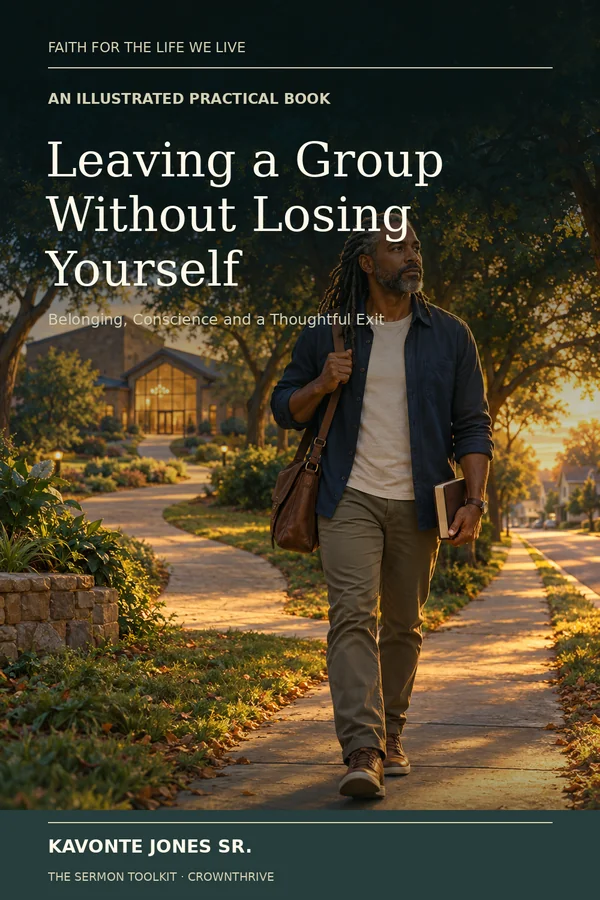
Leaving a Group Without Losing Yourself
Belonging, Conscience and a Thoughtful Exit. A complete reading journey by Kavonte Jones Sr., with a shorter booklet and practical pages you can use in the way that serves you.
10 book chapters41 book PDF pagesPDF + reflowable EPUB
WHY THIS SUBJECT DESERVES ROOM
A group can have mattered to you and still become a place you need to leave or pause. This reading path follows the practical and personal work of an ending: what changed, what remains your responsibility, the explanation you choose to give, friendships, privacy, and the ordinary week afterward. Leaving a Group Without Losing Yourself makes room for gratitude, concern and a future that does not have to keep proving a final verdict about the past.
ONE CONCERN · THREE USEFUL WAYS TO BEGIN
Choose the depth that fits today.
The full book kit already includes the matching booklet and workbook. Their standalone editions are available when a smaller reading or practice companion is what you need. Prices are in USD for personal and household use.
The complete book kit
Leaving a Group Without Losing Yourself
A practical adult Christian short book about leaving a voluntary group with conscience, privacy and thoughtful care. Ten chapters examine changed participation, an appropriate explanation, real responsibilities, friendships, mixed grief and the ordinary week afterward, without making departure, return or public disclosure a required outcome.
Leaving a Group Without Losing Yourself · Practice Workbook
Twelve worked exercises for Leaving a Group Without Losing Yourself, with specific questions, concrete examples and room to write. Already included in the matching complete book kit.
Separate an observable circumstance or participation limit from a claim about another person’s motives. Identify the information or suitable support you need.
02
Give the ending an honest scope
Consider real responsibilities and an appropriate explanation. Let each friendship have its own choices, without a campaign for loyalty or public vindication.
03
Attend to the life still here
Remember accurately, respect present limits, and plan a manageable part of the week. A new group or a return is not the required conclusion.
KEEP THE SURROUNDING CHAPTER CLOSE
Read along for free.
These links open the surrounding KJV chapter. The book’s original reflections remain separate from Scripture. Read with context, and use a Bible appropriate to your territory.
Belonging Without Losing Yourself · Two-Book Study Library
Read A Community That Can Hold Us alongside Leaving a Group Without Losing Yourself. Both complete book kits and their matching companions are included.
No. It supports considered reflection about adjustment, pause or departure, with current qualified guidance for consequential formal, professional or safety questions.
Must I decide that the group was bad?
No. Changed capacity, a different season or a particular concern can be considered without erasing every good part of the shared experience.
Are contact, reconciliation or disclosure required?
No exercise requires them. Private reflection is a complete use of the material, and appropriate urgent help should not wait for a reading sequence.